
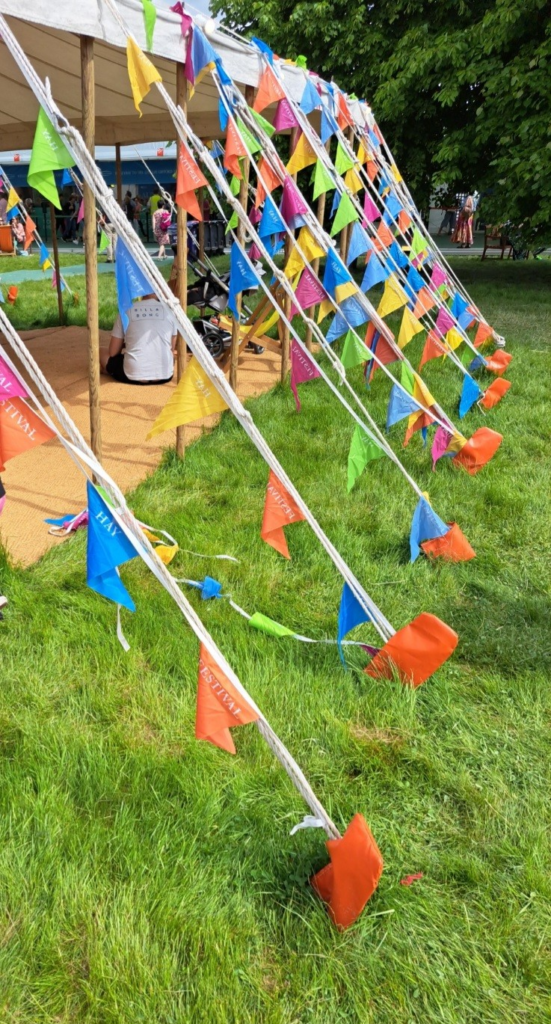
If you’re planning to attend the Hay Festival with children, one of the most exciting moments of the year arrives when the programme is released. Suddenly hundreds of talks, performances, workshops, and conversations appear — and the temptation is to start booking immediately.
But when you’re attending with young children, a little planning goes a long way.
After attending the festival for over 12 years, including many visits as a family of four (two adults and two children), we’ve found that taking a thoughtful approach to choosing events makes the experience far more enjoyable for everyone.
This guide explains when the programme is released, how ticket booking works, and our top tips for planning your schedule.
When the Hay Festival Programme Is Released
The Hay Festival usually takes place over 11 days during the May half-term period, and the programme is released in stages.
Earlybird Events
A small selection of events — often around 40–50 headline talks — are typically announced in early December. These give a preview of the festival and allow keen attendees to book a few early tickets.
Full Programme Release
The full programme of 500+ events is usually released in early March each year.
This is the key moment when most people plan their festival schedule.
Ticket Sales
Ticket sales normally follow a clear pattern:
- Members and priority booking: shortly after the programme release
- General ticket sales: usually mid-March
Events can sell out quickly — particularly the biggest speakers and children’s authors — so it’s worth knowing your plan before tickets go on sale.
Step One: Decide How Many Days You’ll Go
The first decision isn’t which events to attend — it’s how long you’ll stay.
Some families visit for a single day, while others attend for the entire week. For us, the sweet spot is usually two to four days.
This gives enough time to enjoy several events without the children becoming overwhelmed or tired.
Questions to consider:
- How far do you need to travel?
- Will you stay locally or visit for the day?
- What else might you want to do in the area?
Once you know roughly how long you’ll stay, planning becomes much easier.
Step Two: Choose a Range of Possible Days
Rather than locking yourself into specific dates immediately, it’s helpful to identify a range of days you could attend.
The reason is simple: there are excellent events every single day of the festival.
By keeping your schedule flexible at the start, you give yourself more options when reviewing the programme.
Once the full programme is released, check what’s happening on each of the days you could realistically attend, then choose the combination that works best for your family.
Think of it as finding the best overall fit, rather than chasing one specific event.
Step Three: Accept That You Can’t See Everything
The Hay Festival programme is huge — typically 500–600 events across multiple stages.
At first glance it can feel overwhelming.
But the reality is that no one sees everything. Even seasoned attendees will only see a small fraction of the programme.
The goal isn’t to maximise quantity.
The goal is to create a relaxed, enjoyable schedule that works for your family.
Step Four: Allow Plenty of Time Between Events
One of the biggest mistakes people make when booking events is scheduling them too tightly.
The festival site is large and busy, and moving around with children always takes longer than expected.
When planning your schedule, consider:
- Walking between venues
- Toilet stops
- Queueing for food
- Finding seats before events begin
- Children needing breaks
We try to leave at least 45–60 minutes between events whenever possible.
This keeps the day relaxed rather than rushed.
Step Five: Factor in Arrival Time
If you’re travelling to the festival for the day, it’s important to allow plenty of time for arrival.
Think about the full journey:
- Driving to Hay-on-Wye
- Parking
- Walking to the festival site
- Entering the site
- Finding the venue for your first event
All of this takes longer with children.
As a rule of thumb, we aim to arrive at least an hour before the first event we want to attend.
This gives time to settle in, explore a little, and avoid starting the day stressed.
Step Six: Respect the Age Ratings
One thing the festival does very well is provide clear age guidance for children’s events.
In our experience, these ratings are accurate and worth following.
If an event is designed for ages 7+, younger children may struggle to stay engaged for the full talk.
Choosing events that genuinely suit your children’s age makes a big difference to everyone’s enjoyment.
Step Seven: Split Up Sometimes
We’re a family of four, and we don’t always attend events together.
Sometimes one adult goes to a talk with one child, while the other adult attends something different with the other child.
This approach works surprisingly well.
It allows each person to attend events they are genuinely interested in, rather than trying to find sessions that suit everyone at once.
Step Eight: Decide a Sensible Number of Events
Another common mistake is overbooking events.
Even if talks are fascinating, too many in one day can become tiring — particularly for younger children.
Our usual approach when visiting for a few days is:
- Two events per child
- Two events per adult
Spread across the visit, this creates a balanced schedule with plenty of downtime.
Remember: some of the best festival moments happen between events.
Step Nine: Be Open-Minded
One of the joys of Hay Festival is discovering ideas you didn’t expect.
If you’ve never attended before, it’s tempting to focus only on speakers you already know.
But some of our favourite events over the years have been talks we chose simply because the topic sounded interesting.
After attending for over a decade, I can honestly say I’ve never left an event without learning something or enjoying it.
So try a mixture of:
- One event you’re excited about
- One event that’s completely new
You might be surprised.
Step Ten: Plan What Happens Between Events
The festival site itself is full of things to explore.
There are:
- Bookshops
- Food stalls
- Craft activities
- Exhibitions
- Family areas
- Outdoor spaces to relax
There are also workshops and craft sessions specifically for children, some of which require booking.
Thinking ahead about what the children will do while others attend talks can make the day flow much more smoothly.
Extra Tips for Families Attending Hay Festival
A few additional things we’ve learned over the years:
Bring Snacks
Queues can be long at peak times, so having snacks for children can save the day.
Wear Comfortable Shoes
You will walk far more than expected.
Check Venue Locations
Events take place across several tents and spaces — knowing where you’re going avoids last-minute stress.
Leave Time to Browse the Bookshop
The festival bookshop is legendary and often the highlight for young readers.
Expect the Unexpected
Children sometimes enjoy things you didn’t expect — and skip things you thought they’d love.
Stay flexible.
Final Thoughts
Planning your Hay Festival schedule is part of the fun.
With a little preparation — choosing the right days, spacing out events, and staying flexible — the festival becomes a brilliant experience for the whole family.
The key is not to overfill the schedule.
Instead, build a few memorable events around plenty of time to explore, relax, and enjoy the atmosphere.
When you get the balance right, Hay Festival becomes one of the most inspiring family days out you can have.
And once you’ve been once, you’ll almost certainly start planning your return.